


 EN
 IT
 FR
 ES
 DE

Best Eventbrite Alternatives for Small Event Organizers

Choosing an online event ticketing platform looks simple until you actually start organizing an event.
Eventbrite is often the first platform many organizers consider. It is familiar, trusted, and makes it simple to publish an event. But after organizing smaller events, workshops, fundraisers, or community gatherings, some organizers start asking different questions.
- Do I need a marketplace when my attendees already come from my own audience?
- Are the ticket fees worth paying for the features I actually use?
- Can I create an event experience that matches my own brand?
- Can I manage registrations, payments, and attendee information without sending people somewhere else?
That is why many small event organizers start looking for Eventbrite alternatives. But finding the right option is not about choosing the platform with the longest feature list. It is about understanding what problem you are trying to solve.
In this guide, I will compare the most practical Eventbrite alternatives for small event organizers based on real use cases, features, pricing, and the situations where each platform makes sense.
TL;DR
There is no single Eventbrite alternative that works for every organizer. The right choice depends on your event type and priorities.
- PaymentForm.io fits organizers who want to create and sell tickets through a flexible checkout form, whether they use a website, landing page, or simply share the event form link.
- Luma works well for communities, meetups, and recurring gatherings where attendee relationships matter.
- Zeffy is designed for nonprofits running fundraising events and community initiatives.
- Ticket Tailor is a good fit for organizers who want predictable per-ticket pricing.
- TicketLeap suits venues and event creators looking for straightforward ticket management.
- TicketSpice is better suited for complex ticketing needs such as timed entry, attractions, and recurring events.
Why are small organizers looking beyond Eventbrite?
Eventbrite is popular for a reason. It gives organizers everything in one place. You can create an event, sell online tickets, manage attendees, check people in, promote the event, and access a marketplace where people are already searching for events. But the problem is that small events often operate differently.
1️⃣ Small organizers often already have an audience
A yoga instructor may sell workshop tickets through Instagram. A sports academy may share registration links directly with parents. A community organization may promote its annual fundraiser through email, while a trainer may already have a WhatsApp group full of potential attendees.
For these organizers, the biggest challenge is usually not finding attendees. They already have a community, followers, or customers. What they need is a simple way to turn that existing audience into registered attendees and collect payments without adding unnecessary complexity.
This creates an important question. If you already have your own audience through Instagram, Facebook, email, your website, or community channels, is paying for a large event marketplace actually worth it?
2️⃣ Ticket fees can make a bigger difference for smaller events
Once ticket volume is smaller, every fee becomes more noticeable.
Eventbrite currently lists a 3.7% + $1.79 service fee per paid ticket in the United States, along with a 2.9% payment processing fee per order. Free events do not carry these ticketing fees.
For example, imagine you organize a workshop with 100 attendees and charge $25 per ticket. If every attendee purchases one ticket separately, the published Eventbrite rates would result in around $344 in service and processing fees, which is about 13.76% of the total $2,500 ticket revenue.
That is not just spreadsheet math. Small organizers are actively talking about it.
One organizer running monthly workshops for roughly 50 to 80 people at $15 to $25 per ticket wrote on Reddit in June 2026 that “Eventbrite’s fees were making the events barely profitable. They also mentioned attendee complaints about advertising around the checkout experience.“
Another organizer said, “Most customers came through their venue website and Instagram, which made paying for a large ticketing marketplace feel less useful.”
3️⃣ Event Ticket Payout Timing Matters for Small Organizers
Fees are not the only consideration. Small organizers also need to think about when they receive their money.
For many small events, ticket sales are not just revenue. They are often used to cover expenses before the event starts, such as venue deposits, catering, equipment, marketing, or speaker payments. Having access to those funds at the right time can make event planning much easier.
Eventbrite offers payout options for eligible organizers, including instant payouts, but faster access to funds comes with additional costs and limits. Eventbrite charges a 3% fee for each Instant Payout request, with a minimum fee of $2.99 and a maximum fee of $40 per request.
Eventbrite can also apply withdrawal limits for pre-event payouts. According to Eventbrite’s payout policy, the platform may hold 20% of an event’s net sales as a reserve to help cover potential refunds, chargebacks, and cancellations. If an organizer’s available funds fall below the reserve threshold, instant payouts may not be available until additional ticket sales are made.
There is also a payout cap for pre-event payments. Eventbrite allows eligible organizers to receive up to $100,000 USD (or equivalent currency) in pre-event payouts across active events, including instant payouts and scheduled payouts.
For large events, these payment controls may not create a major challenge. But for small organizers managing tight budgets, payout timing, reserve amounts, and access to ticket revenue can make a real difference.
How I Have Compared These Eventbrite Alternatives
Not every event organizer is looking for the same thing. A nonprofit running a fundraising dinner has different needs from a venue managing weekly shows. A community organizer hosting meetups has different priorities from someone selling online tickets for a festival.
So instead of comparing these platforms only by feature count, I looked at the factors that usually affect the final decision:
Pricing model: How does the platform charge? A percentage fee, fixed ticket fee, subscription, or another model?
Event type and workflow: Is the platform designed for simple registrations, community events, nonprofit fundraising, venue operations, or more complex ticketing?
Payment handling: How do organizers receive ticket revenue, and does the payout process fit their event planning?
Ticketing flexibility: Can the platform handle different ticket types, pricing rules, check-in, and attendee management?
Quick Comparison of Eventbrite Alternatives
| Platform | Pricing Model | Payout Timing | Best For |
|---|---|---|---|
| PaymentForm.io | Free plan available. Paid plan starts at $9/month | Direct to your connected gateway account | Organizers who want direct ticket selling through their own audience |
| Luma | 5% on paid tickets, 0% on Luma Plus at $59/month | Direct to your Stripe account | Communities, meetups, and recurring gatherings |
| Zeffy | No platform fees for eligible nonprofits | Payment processor dependent | Nonprofits and fundraising events |
| Ticket Tailor | Pay-as-you-go starts at $0.85 per ticket. Prepaid credits can reduce the cost to as low as $0.30 per ticket. | Depends on the connected payment provider | Organizers looking for predictable ticket costs |
| Ticketleap | $1 + 2% per ticket for tickets above $5, plus 3% online transaction fee per order. Tickets $5 or below use a $0.49 ticket fee. | Event-based payout options | Venues, performances, and community events |
| Ticketspice | Standard online fee is $0.99 per paid ticket. | Weekly | Attractions, festivals, and complex ticketing needs |
Eventbrite Alternatives I Would Consider for Small Events
PaymentForm.io
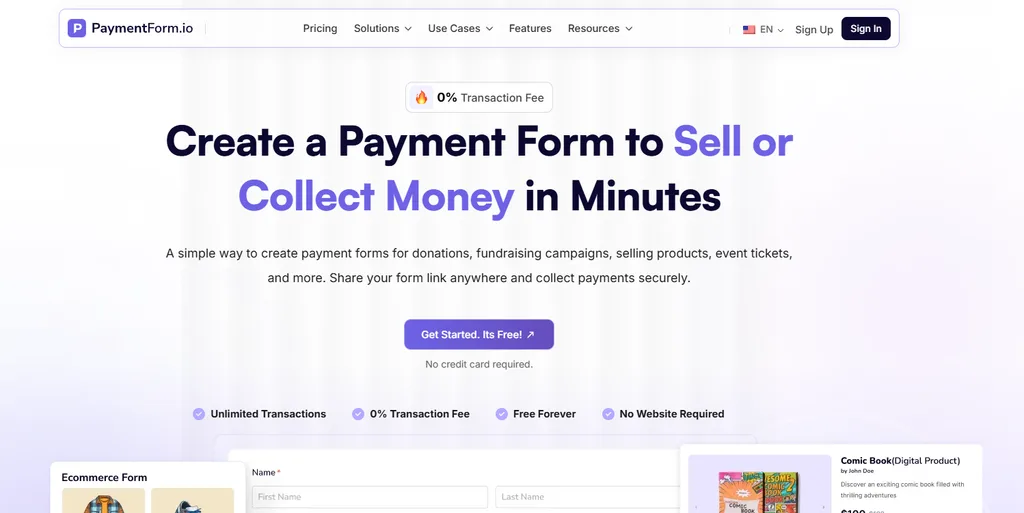
PaymentForm.io takes a different approach to event ticketing. Instead of depending on an event marketplace, it helps organizers create a direct ticket-selling experience through their own website, landing page, or shareable event form link.
At its core, PaymentForm.io is a form-based checkout platform with different modules for different use cases, including event tickets, donations, fundraising, memberships, contracts, and e-commerce. The Event Ticket module allows organizers to create ticket-based events, collect attendee information, connect payment gateways, and provide QR-based tickets for entry management.
Key Features
- Multiple Ticket Types: Create General Admission, VIP, Early Bird, free registrations, and custom ticket options.
- Flexible Ticket Rules: Set pricing, availability periods, quantities, and purchase limits.
- Shared Ticket Inventory: Manage multiple ticket categories under one event capacity.
- Attendee Information Collection: Collect details for each attendee, including group purchases.
- QR Code Tickets: Generate unique tickets for faster event entry.
- Flexible Ticket Delivery: Send tickets to buyers or individual attendees.
- Event Details Management: Add schedules, speakers, performers, and supporting information.
- QR Check-In: Verify tickets through QR scanning or manual codes.
- Staff Check-In Access: Allow event staff to manage entry without accessing the main account.
- Custom Event Pages: Create event pages with a drag-and-drop page builder.
- Checkout Customization: Manage payment gateways, emails, invoices, taxes, and coupons.
Pricing
PaymentForm.io offers a Free plan at $0/month with unlimited forms, submissions, and no PaymentForm.io transaction fee. It includes access to all modules, including the Event Ticket module. The Pro plan starts at $9/month.
Luma

Luma is built around a different type of event experience. Instead of focusing mainly on ticket sales, it is designed for communities, meetups, and recurring events where organizers want to create a stronger connection with attendees.
It is commonly used by tech communities, networking groups, workshops, private gatherings, and organizations that regularly host events. The platform focuses on creating polished event pages, managing registrations, communicating with guests, and keeping attendees engaged before and after an event.
For organizers who run events as part of a community rather than as one-time ticket sales, Luma can feel closer to an event relationship platform than a traditional ticketing tool.
Key Features
- Event Pages: Create event pages designed for registrations and sharing.
- Free and Paid Events: Host free events or sell paid tickets.
- Ticket Types and Group Purchases: Create different ticket options and allow group registrations.
- Guest Management: Manage registrations, approvals, and attendee details.
- Event Communication: Send reminders, updates, and announcements through email and other channels.
- Community Calendar: Let followers discover upcoming events from your calendar.
- QR Check-In: Manage attendee entry through mobile check-in tools.
Pricing
Luma offers a free plan with unlimited events and guests. For paid events, the free plan charges a 5% platform fee, while organizers can upgrade to Luma Plus at $59/month for 0% platform fees on paid events.
Zeffy
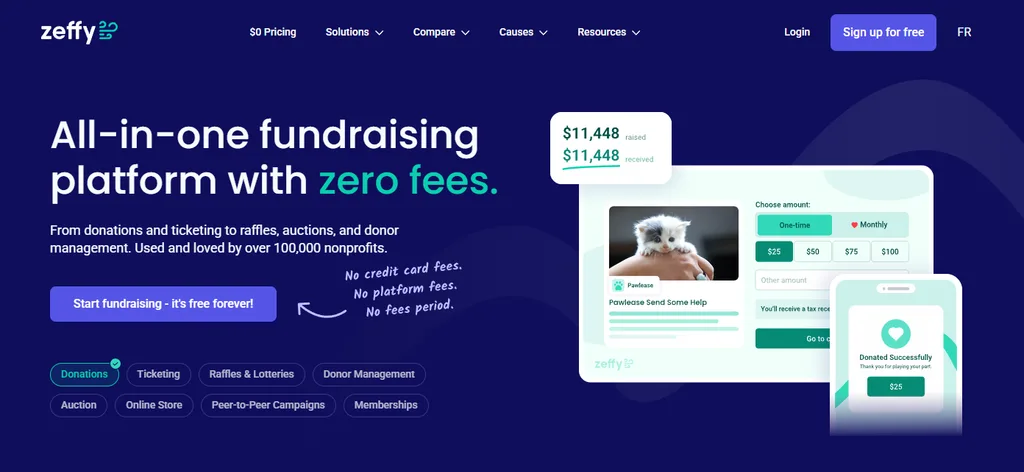
Zeffy takes a different approach by focusing specifically on nonprofit and fundraising events. Instead of being designed for general event organizers, it is built for organizations that use events as part of a larger mission, such as charity dinners, fundraising campaigns, galas, and community programs.
For nonprofits, an event is often more than selling a ticket. The organizer may also need to collect donations, manage supporter information, issue receipts, and maintain relationships with attendees after the event. Zeffy combines event ticketing with fundraising-focused tools to support that workflow.
Key Features
- Fundraising Event Tickets: Create tickets for galas, charity events, and community fundraisers.
- Multiple Ticket Types: Offer general admission, VIP, group tickets, tables, and sponsor options.
- Donation Collection: Allow attendees to add additional contributions during checkout.
- QR Code E-Tickets: Generate digital tickets and scan attendees at the event.
- Attendee Information Collection: Collect custom participant details during registration.
Pricing
Zeffy offers its platform at $0 cost for nonprofits and does not charge platform fees for event ticket sales. Instead, the company relies on optional contributions from users who choose to support Zeffy.
Ticket Tailor
Ticket Tailor focuses on keeping ticketing simple and cost predictable. Instead of building its business around event discovery, it gives organizers a straightforward way to create ticket pages, sell tickets, and manage attendees while allowing them to control how they promote their events.
Its main difference is the pricing approach. Rather than taking a percentage of every ticket sale, Ticket Tailor uses a fixed per-ticket pricing model, with the option to purchase ticket credits upfront to reduce the cost per ticket.
Key Features
- Multiple Ticket Types: Create different ticket options, including general admission, VIP, early bird, and custom ticket categories.
- Embeddable Checkout: Add ticket sales directly to your own website.
- Ticket Credits: Purchase credits upfront to reduce per-ticket costs for higher-volume events.
- Mobile Check-In App: Scan tickets and manage attendee entry from a mobile device.
- Custom Branding: Adjust the ticketing experience to match your event identity.
- Reserved Seating: Create seating layouts for events that require assigned seats.
- Recurring Events: Manage repeated events such as classes, tours, and regular sessions.
Pricing
Ticket Tailor uses a usage-based pricing model rather than a monthly subscription. The Pay as you go plan starts at $0.85 per ticket, while organizers can purchase ticket credits upfront to reduce the per-ticket cost, starting from $0.30 per ticket depending on the number of credits purchased. Free tickets are available without fees within fair usage limits.
TicketLeap
TicketLeap is designed for organizers who need a complete ticketing workflow for events such as performances, shows, classes, community gatherings, and venue-based experiences. The platform focuses on helping event creators manage the practical side of running an event, including branded event pages, ticket sales, attendee entry, and reporting.
Key Features
- Branded Event Pages: Create customizable event pages with your own images, information, and branding.
- Flexible Ticket Types: Sell general admission, VIP, early bird, free, or pay-what-you-want tickets.
- Reserved Seating: Build seating charts for venues with assigned seats.
- Timed Entry: Manage capacity by offering specific entry times.
- Ticket Scanning App: Scan QR codes or check attendees in by name.
- Box Office App: Sell tickets at the venue using mobile tools.
- Recurring Event Management: Schedule repeated events and time slots.
- Reporting Tools: Track ticket sales and event performance.
Pricing
TicketLeap does not charge a monthly subscription fee. For paid online tickets over $5, it charges a $1 + 2% ticketing fee per ticket, along with a 3% online transaction fee per order. For tickets priced at $5 or below, the fee is $0.49 per ticket plus a 3% transaction fee. Free events do not have TicketLeap fees. Organizers can choose whether to cover these fees themselves or pass them to buyers.
TicketSpice
TicketSpice is designed for organizations where ticketing involves more than selling a basic event pass. It is commonly used by attractions, festivals, fairs, venues, and recurring events where organizers need more control over ticket rules, entry times, seating, and customer experience. Instead of focusing on event discovery, TicketSpice focuses on helping organizations manage their own ticketing operations.
Key Features
- Custom Ticket Pages: Create branded ticketing pages for your organization.
- Timed Entry: Manage capacity with scheduled arrival windows.
- Multiple Ticket Options: Offer different ticket types, upgrades, and add-ons.
- Reserved Seating: Create seating charts for assigned seating events.
- On-Site Sales: Sell tickets through venue box office tools.
- Ticket Scanning: Verify attendees at entry.
- Recurring Event Support: Manage attractions and events that run regularly.
- Checkout Customization: Collect additional information during purchase.
Pricing
TicketSpice uses a per-ticket pricing model instead of a monthly subscription. Online tickets priced above $5 include a $0.99 ticketing fee per ticket, while tickets priced at $5 or below have a $0.49 fee per ticket. Payment processing fees apply separately, with Webconnex Payments listed at 2.9% + $0.30 per transaction.
Final Thoughts
Eventbrite remains a popular choice because it combines event creation, ticketing, and marketplace discovery in one platform. But the best event platform depends on how you organize, promote, and manage your events.
If your priority is reaching new attendees through a marketplace, Eventbrite may still fit your needs. If you are looking for lower ticketing costs, stronger community management, nonprofit-focused tools, or more control over your ticket-selling experience, one of these alternatives may be a better match. The right choice comes down to understanding your event workflow.
FAQs
What is the best Eventbrite alternative for small events?
The best Eventbrite alternative depends on the type of event you run. PaymentForm.io works well for organizers who want direct ticket selling through their audience. Ticket Tailor focuses on predictable ticket pricing, Luma fits community events, and Zeffy is designed for nonprofit fundraising events.
Can I sell tickets without using an event marketplace?
Yes. Many ticketing platforms allow organizers to sell tickets through their own website, landing page, or direct event links. This approach works well for organizers who already promote events through their own marketing channels.
What is the difference between Eventbrite and Ticket Tailor?
Eventbrite combines ticketing with event discovery through its marketplace, while Ticket Tailor focuses more on direct ticket sales with a fixed per-ticket pricing model. The better choice depends on whether you need marketplace reach or a simpler ticketing cost structure.
Is there a free alternative to Eventbrite?
Yes, but “free” means different things. Zeffy charges eligible nonprofits no platform or payment processing fees. PaymentForm.io has a $0 plan with unlimited transactions and 0% platform transaction fees, although payment gateways charge processing fees. Luma is free for free events but applies a 5% platform fee when selling paid tickets on its Free plan.